

The Unexplained
This week Lengro is chatting about all things ‘unexplained’ and what better place for me to start than the theatre. The world of theatre is steeped in odd traditions and superstitions. Well, if you cram a bunch of creative artists together in one location for weeks or months then something weird is bound to happen. Although some of the old superstitions come from logical circumstance and common sense, others seem to go way back and have lots of history behind them. I thought I’d tell you about the most common superstitions and the theories behind them.
No Whistling
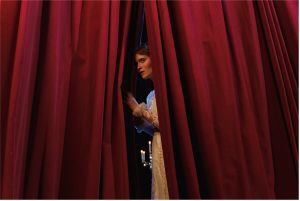
Whistling in the theatre is considered bad luck. This superstition started in the middle of the 1600s when theatrical scenery began to fly. Sailors had knowledge of ropes, rigging and knots and were hired as backstage crew and just like on a ship, the sailors would communicate with each other through whistles to bring a backdrop in or out. Consequently, a whistling actor onstage could start a scene change early or get knocked out from incoming scenery. This could have a disastrous effect so it’s not surprising that this superstition calls for someone to be fired in the event of a rogue backstage whistler. Luckily, we communicate through headsets in the theatre now, but the tradition of no whistling remains.
The Ghost Light and Thespis
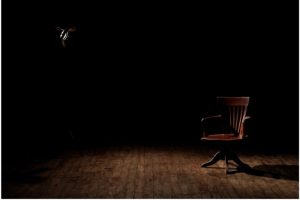
Another superstition that is logical is that of ‘The ghost light’. At the end of the evening, the last person in the theatre must leave a light on, called a ghost light, lit in the middle of the stage. Backstage theatres can be dangerously cluttered with scenery, props and costumes and so this serves a practical purpose but The Actor’s Equity, the acting union, requires that there be some light onstage at all times. But it has been said that this light appeases the ghosts living in the theatre and gives them light to perform during the evening. Have you ever wondered why some theatres close on Mondays? Some believe that the ghost of Thespis, who was apparently the first person to speak lines as an individual actor onstage in 6BC, thus fathering the term “thespian”, visits the theatre one night per week to return to the stage and cause unexplained mischief. This superstition states that the theatre should be empty at least one night per week, traditionally Mondays, to placate the pesky Thespis. So “The ghost light” should be placed on stage to give the ghosts enough light to see, but of course, it is a practical health and safety device to prevent tripping over props in the dark for celestial and non-celestial beings alike!
The Evil Eye
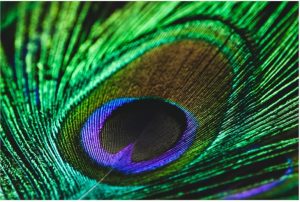
Peacock feathers are not allowed in the theatre. The Greek myth of Argus tells the story of a giant whose body was covered with one hundred eyes. After he was slain protecting the nymph Io, his eyes were preserved forever in a peacock’s tail. The peacock feather has now come to represent the evil eye to many thespians who believe that chaos will ensue if the dreaded feather makes its way onstage. The “evil eye” of the peacock feather has been blamed for cursing many productions.
Double, double toil and trouble
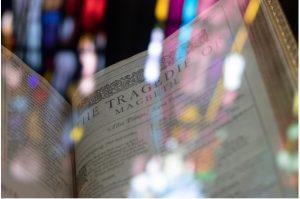
Saying “Macbeth” in the theatre allegedly curses the production. This has long been part of actor’s folklore, and Shakespeare’s famous tragedy is now more commonly called “The Scottish Play,” or “The Bard’s Play” or even “Mac B.” Uttering the real name of The Scottish Play in a theatre is well known to have terrible consequences.
There are dozens of theories about when, where, and why performers started avoiding the play’s title; Some believe that Shakespeare gave his three witch characters in the opening scene, real spell incarnations for lines. As retaliation, a coven of actual witches cursed the play. It’s said that the actor playing Lady Macbeth tragically died on opening night in 1606 and Shakespeare himself had to step in. Another example is a story of feuding Macbeth productions in New York that caused the great Astor Place Riot in 1849, leaving more than 25 dead and hundreds injured. Other productions have said to have been plagued with accidents, including actors falling off the stage, mysterious deaths, and even narrow misses by falling stage weights. So, don’t tempt the witches, and don’t say Macbeth in the theatre! But if you do accidentally say the dreaded “M” word, one way to absolve yourself is to leave the theatre immediately, spit, curse (a Shakespearean curse!), spin three times and beg to be allowed to re-enter. Fingers crossed your director is forgiving.
Good Luck Rituals
There are a few traditional good luck rituals that performers always tend to adhere to – just in case!
- Break a leg – Tell an actor “break a leg” on opening night (never “good luck!”).There are a couple of credible theories on the origin of this superstition. The first comes from Elizabethan England when actors were sometimes thrown money after a good performance. They would kneel down to pick up the coins, “breaking” the straight line of their legs. Another theory comes from vaudeville performance when there were multiple acts scheduled. Masking curtains on the sides of the stage are called legs. If a vaudeville actor were to “break a leg,” they would cross in front of the legs onto the stage to perform that evening and to have gotten paid. Regardless of the origin, please don’t jinx your friend and wish him or her good luck on opening night.
- Sleep on your script – Whilst I wouldn’t recommend relying on this superstition, I like the idea of keeping your script close to your heart (or head) and sleeping with it under your pillow. Some believe that this will help the lines diffuse into your memory although, funnily enough, there is no science to back this up!
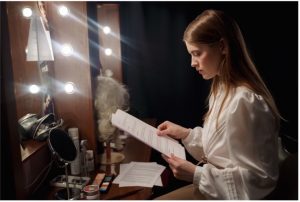
- The Last Line – According to this superstition, performers should never speak the final line of a show before it opens. Similarly, bad luck will befall anyone who takes their bows to an empty house. It is a tribute that the show is not complete without the audience.
- The curse of a good dress – Many actors believe that a bad dress rehearsal signals a successful opening night. This is probably due to a great sense of positivity and camaraderie amongst performers and a morale boost from the director, but I don’t think a good dress rehearsal should be sniffed at!
- Best foot forward – For performers, it is said that leading with your left foot as you exit a dressing room is good luck. On the other hand (or should I say foot), audiences should enter a theatre leading with the right foot.
So, whether you believe in them or not, most performers will follow these rituals and superstitions even if it’s just to stop you from getting fired! The Lengro team have so much more to tell you about the unexplained and paranormal, so go check them out. And for now, I take my bow until my next performance!
Stay safe and well,
Gemma x
Instagram: www.instagram.com/gemquayle
Facebook: https://www.facebook.com/groups/2737290146503023/?ref=share
There are people that are here for you. Here are some numbers if you feel like you do need help:
https://parents.actionforchildren.org.uk
CALM (Campaign Against Living Miserably): 0800 58 58 58
Samaritans: 116 123
YoungMinds: 0808 802 5544
Combat Stress (for veteran’s mental health): www.combatstress.org.uk Helpline: 0800 138 1619