


Hi everyone, I hope you are doing well. This week at Lengro magazine we are, of course, taking time for remembrance and to think about for all those that have given their lives and time to save us in days gone by. We all know someone or have someone in the family who has fought for our lives and our country, in whatever way was needed and I for one will be eternally grateful for their sacrifice.
They shall not grow old, as we that are left grow old:
Age shall not weary them, nor the years condemn.
At the going down of the sun and in the morning,
We will remember them.
– ‘For the fallen’ by Robert Laurence Binyon
Remembrance for Children…
Remembrance is a difficult thing to discuss with children. We always say that the poppies and the 2 minutes silence was to remember the soldiers that have helped us. I’m sure there are many parents out there that don’t know quite how to explain remembrance day to their children. But I do feel that it is important for the younger generations to know and understand the sacrifices that were made for us, so here are a few ways that might help you talk to your children about it.
1. Remembrance for very young children – A very gentle introduction to Remembrance is this lovely little 2-minute animation. It is set to some beautiful music that helps to create just the right mood and drama and we see a happy little rabbit make a sacrifice to allow other rabbits to come and play again. We like to watch it every year. You can find it here.
Poppies are the symbol for Remembrance and so drawing, colouring and making poppies with your little ones every year will help to make remembrance a significant time for them and each year they will gradually grow more curious and they will want to ask questions and talk. This is the best way I think, then you are not forcing the subject, but letting your children discover more about it organically, by introducing these simple things into their lives.
2. For slightly older children – When children reach an age of better understanding then you can start to talk more about what really happened, but be careful not overdo the drama, you don’t want to traumatise them and give them nightmares! Have them talk to their older relatives about what they remember about war times and what they know about their relatives during wartime. Hearing stories like this can bring that time to life and make it more relatable, plus it is always so interesting to hear even for the adults. You can then go to museums and this helps them to understand further, bring a real sense of realism and allows for more chat and questions about what they know.
Kacey has written a little bit about some members of our family and how they contributed to the war effort and beyond. So please go over to the Lengro Kidz page here and read about these amazing people through a child’s eyes.
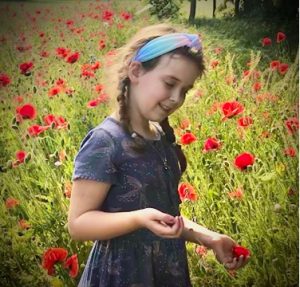
During our home school days of lockdown, we used a lot of BBC teach resources and we came across this when we were looking a VE day.
It is a collection of little bitesize videos explaining different aspects of the first world war, narrated by children, with real footage and pictures and featuring little monologues too to bring a bit of realism to the information. Kacey really took to them and we just watched a few at a time and casually chatted about them.
Another great way to bring children information is good old ‘Horrible Histories’. We love this show and it really brings history to life in a light and informative way. You can see all the episodes on World war 1 here.
3. The importance of remembrance for teenagers – As a teacher of teenagers I know there are a many different ‘types’ of teen and so tackling certain topics can be difficult, but I do feel that it is important to try and remind them of the sacrifices people made and how men of 17 years old were made to go and fight – no choice! It is very easy for some teens to get caught up in their own lives and so this can be an easy way to bring them back down to earth and remind them that being self-less is important. Again talking to older generations can be helpful here and hearing of others life experiences really brings it home sometimes. I know it does for me.
Real-life, not just history…
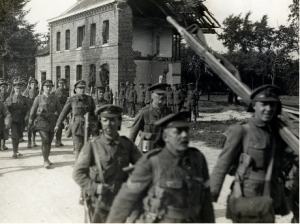
I feel like sometimes it’s all too easy to leave everything up to school to teach our children about war and remembrance, but it is our duty as parents to make sure that our children realise that it happened to real people. People we know, people that we are related to. And how life was for everyone for a very long time. Talking is key. Look at old pictures and video footage of the time. It is a history we all share, but it shouldn’t just be a history lesson, it needs to be a life lesson and that should come from outside of the classroom. Also, we need to remind them that it isn’t just in the past and that battles are continuing in the world, in many different ways and that men and women are still fighting in the world and making huge sacrifices for us and others all around the world. And so many men and women are living with the after-effects of war and we must support them and appreciate all that they have given up. You can do this by supporting the following charities;
www.ssafa.org.uk (The Armed Forces Charity)
Today’s fight…
We have been facing a completely new battle this year and as we have entered our second lockdown, I am reminded of the most amazing poem that I heard earlier this year and I want to take this chance to show it to you. It perfectly sums up the battle we are facing at the moment. War poems are such a huge part of the retelling of wartime and this is a poem for our time;
Our Heroes
By Matt Kelly
I’ll tell you a tale that’s been recently written,
Of a powerful army, so Great it saved Britain.
They didn’t have bombs and they didn’t have planes,
They fought with their hearts and they fought with their brains.
They didn’t have bullets, armed just with a mask,
We sent them to war, with one simple task.
To show us the way, to lead and inspire us,
To protect us from harm and fight off the virus.
It couldn’t be stopped by our bullet proof vests,
An invisible enemy invaded our chests.
So we called on our weapon, our soldiers in blue,
All doctors, all nurses, your country needs you!
We clapped on our streets, hearts bursting with pride,
As they went off to war, while we stayed inside.
They struggled at first, as they searched for supplies,
But they stared down the virus, in the whites of its eyes.
They leaped from the trenches and didn’t think twice,
Some never came back, the ultimate price.
So tired, so weary, yet still they fought on,
As the virus was beaten and the battle was won.
The many of us, owe so much to so few,
The brave and the bold, our heroes in blue.
So let’s line the streets and remember our debt,
We love you, our heroes, lest we forget.
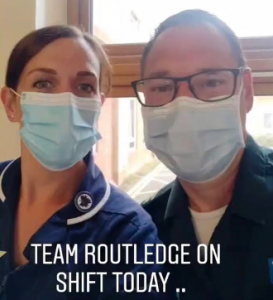
My amazing brother and sister-in-law – my heroes in blue.
Gemma x
Instagram:@gemquayle
Facebook: Gemma Quayle’s Winging it/Singing it
If you are in need of some help then please do reach out. There are people that can help you. Here are some numbers if you feel like you do need help:
Combat Stress (for veteran’s mental health): www.combatstress.org.uk Helpline: 0800 138 1619
CALM (Campaign Against Living Miserably): 0800 58 58 58
Samaritans: 116 123
YoungMinds: 0808 802 5544