


Hi there wingers. This week at Lengro we are talking about what makes us different. Everyone is different and has different challenges in their life. But challenges can make us bigger, better, stronger, and wiser. This can be very true for those who have experienced a speech disorder. People who stutter or have a speech disorder may begin to develop anxiety, as stress and embarrassment increase through daily interaction and public speaking.

“A stutter can be like a straitjacket”
– Emily Blunt
The Mary Poppins Returns actress used to suffer from a stutter in her teens and her drama teacher suggested using different accents to help her stop. Speech disorders can begin to really inhibit a person, but it can also be the making of someone too.
Famous People Who Overcame a Stammer
King George VI famously had a stammer that he had to overcome when he became King. They even made a film about it. The King’s Speech is a brilliant story that shows just how difficult it can be, but also how you can succeed in developing into a fluid speaker, even when addressing the world.
You may also be very surprised to hear that many musicians and performers have suffered from stammering. Many of them have used music, melody, and rhythm to help overcome their issues. Music is an activity that stimulates the right side of your brain, and language uses the left, so when you sing you use the right side of your brain when communicating rather than your left which is where stuttering may occur. Signals from your brain get sent to your larynx and the muscles vibrate creating pitch and rhythm. When the song contains lyrics, your brain is still focused on the melody. The speech sounds are formed automatically without any thought or effort, therefore taking the stutter away. Singing can also help to strengthen up muscles in the throat and mouth, which can contribute greatly to overcoming a stammer and other speech disorders.

So how did these incredible performers do it? Ed Sheeran said that he used to rap along with Eminem; “He raps very fast and very melodically, and very percussively, and it helped me get rid of the stutter.” Kendrick Lamar knew that music helped me with his stammer; “I think that’s why I put my energy into making music. That’s how I get my thoughts out.” BB King has said that concentrating strongly on his music career actually cured his stutter.
The beautiful and legendary Marilyn Monroe was told to try and use a sing-song tone and style when she spoke to help her with her stammer, and Marilyn’s is probably one of the most recognisable speaking voices ever.

Another very famous and recognisable voice is that of James Earl Jones (the voice of Mufasa from The Lion King and Darth Vader from Star Wars). He struggled so much with his stutter that he barely spoke for 8 years. He has said that reading poetry out loud, using rhythm, pace, and pitch has helped him.
A Stammering Child
It is very normal for a child to hesitate and repeat words and phrases when they are first learning to speak and put sentences together. About 8% of children will experience stammering when they are young, and 75% of them will go on to speak perfectly fluently by either growing out of it or with speech therapy.

What Can You Do At Home?
There are some easy things that you can do at home to help your child if they are struggling with their speech. You can slow down the pace of your speech. This allows your child to see that taking your time is important – but try not to tell your child to slow down, allow them to just go at whatever speed they need.
“It’s easy to get frustrated with a child who stutters, but believe me, the one who stutters is much more frustrated. Be patient, always listen. Offer encouragement, give positive reinforcement always.”
– Bruce Willis (Another famous actor who suffered from a stutter as a child)
- Give your child dedicated time on their own with you, so that they do not have other factors to distract them or things to compete with for your attention. For a child that struggles to get their words out, even the radio is competition.
- Ask one question at a time. This gives your child time to think, and when you listen, keep eye contact and just listen to the words they are saying and not how they are producing the words.
- Reading aloud to your child can be very helpful too. They can hear a range of words and rhythms, and get a sense of fluidity to speaking. It also gives you an opportunity to have light conversation about the book in a calm and quiet setting.
- Always encourage your child gently and give positive reinforcement as much as possible and be aware of any patterns of behaviour. There may be certain situations or people that make the stammer better or worse; finding triggers is very helpful when trying to overcome a speech problem.
- Lastly, play lots of music and sing songs as this can really help with voice production, strengthening muscles in the throat and mouth, and also help a stammering child find confidence in their voice.
Some children will need help with their speech and so it is important to find help sooner rather than later. Speech therapy comes in many different variations and every child will learn and develop differently. Speak to your doctor, health visitor, or your child’s teacher about your concerns and they will be able to advise you on what to do next.
There are many organisations that can help you too;
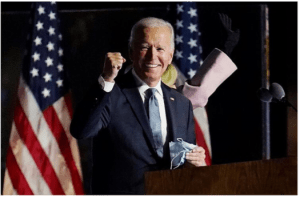
So, as you can see, there are things you can do to help your child overcome their issue and they could go on to become whatever they want, it does not need to hold them back. Even American President Joe Biden has a stutter you know. The world is their oyster.
You can see just what we get up to by following us on my socials and I’d love to see what you do as well, so tag me or use #wingingitsingingit
Instagram: @gemquayle
Facebook: Gemma Quayle’s Winging it/Singing it
Gemma x
There are people that are here for you. Here are some numbers if you feel like you do need help:
CALM (Campaign Against Living Miserably): 0800 58 58 58
Samaritans: 116 123
YoungMinds: 0808 802 5544
Combat Stress (for veteran’s mental health): www.combatstress.org.uk Helpline: 0800 138 1619