

Experience Change with Kirsten Pick Counselling
Recycling – Does it Make a difference?
By Kirsten Pick, Counsellor

I’m sure you’ve noticed this week’s issue is about the environment and recycling. I am very passionate about the environment and try my best to recycle and re-use things as much as possible. To be able to feel good about ourselves we need to be healthy which in turn means we need to live in an environment free of pollution as possible. Nature is fantastic and cleaning the air which is why plants and trees are so important. The architect Stefano Boeri designed vertical forests to combat air pollution – www.stefanoboeriarchitetti.net
I was brought up in Germany where recycling has always been encouraged. As kids, we used to go on building sites and collect bottles to exchange them for ice lollies. It wasn’t just the motivation of getting sweets, it was the sense of adventure climbing around on the building site, looking for “treasure”. Obviously, nowadays that would be impossible due to health and safety rules. I’m sure if any of our parents had been aware they would have been horrified!
In Germany, the culture of recycling is still very strong, you pay a little more for glass and plastic bottles and receive a refund when you take them back, which you can read up on here. It is very easy and convenient to deposit the bottles in machines located in the supermarkets, which encourages recycling. Bins are set up in the front of shops so you can remove any plastic packaging before taking it home; this has encouraged suppliers to cut down on the plastic packaging. Household bins have been divided for a long time, making it easier to separate your rubbish, this is now also more common in the UK. It would be great if there was also a green bin for all compostable items.
Unfortunately, I often find recycling in this country very confusing. It seems that many plastic containers, such as the vegetable and meat trays most supermarket foods come in do not get collected. There are also so many different types of paper, tin, and glass and it can be difficult sometimes to work out which materials go into which bins. You may wonder like I do, why we have received much bigger recycling bins but it appears we can fill them with fewer materials.
To understand a bit more about why some things are not recyclable, here are some facts to help you:
- Not all plastic is biodegradable. Plastic bags and cling film, for example, are made from different types of plastics to plastic bottles, pots, and trays. The most common plastics that can be recycled are made of polyethylene terephthalate (PET)
- Sticky notes can’t be recycled in the paper recycling bins as the glue on the adhesive strip is difficult to remove during the recycling process.
- Drinking glasses and glass cookware are non-recyclable as they are heat-treated so do not melt at the same temperature as some other types of glass.
- Crisp packets have a metallised plastic film; therefore grease residue clings to them.
- Even though 100% cotton is compostable, cotton wool pads used for taking off make up cannot be recycled as the makeup has chemicals in it and the cotton wool is sometimes blended with other materials making it unlikely to decompose.
It is a shame that these issues were talked about nearly 50 years ago and yet not a lot of change seems to have taken place in reducing waste. In fact, we started using more single-use plastic, with take-away coffee cups, small plastic bottles of water, and the above mentioned crisp packets. Luckily the trend is starting, where people are bringing their own containers to reduce the use of plastic and shops are opening where you are encouraged to bring your own containers back… Greta Thunberg managed to raise awareness, but was it enough? Governments are worried about the cost of implementing more environmentally friendly alternatives, but what is the cost to our environment?
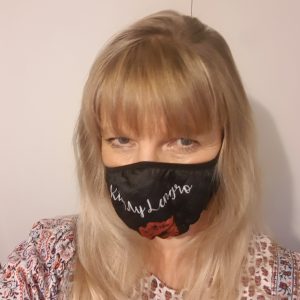
With lockdown, we saw the environment recover drastically, so we are aware of the damage that is done and how to prevent further destruction. The use of masks has encouraged some to use single-use plastic masks and gloves which are polluting the planet. How can people stop using straws but discard masks anywhere? Lucky for us, Emma has found a brilliant way to make our own masks and we have reusable Lengro masks to use.
Supermarkets have taken steps to reduce the use of plastic by removing it from some fruit and vegetables in stores. There is also a small charge for plastic bags which is going to be increased soon. Surely with a bit of imagination, we could do more to help save the environment and reduce costs? Look at Gemma’s fantastic article on how to make a reusable bag. Supermarkets could look at more ways to reduce their packaging; why are 6 tomatoes in a plastic container cheaper than loose tomatoes for example? There are already 2 for 1 or BOGOF offers, maybe these could be extended to loose fruit and vegetables?
As Jacquie mentioned in Issue 12, another way to help the environment is by buying second-hand clothes.
Another thing to consider is a way to collect greywater to use it for example to flush the toilet or all the clean water that is wasted when waiting for it to warm up for a shower or washing up. So if there are any plumbers out there who would like to test out an invention please let me know…
To me, recycling, re-using, and taking care of our environment is very important not just for us but for future generations. I hope they will be able to enjoy some of the fascinating nature that we can observe today and breathe in clean air.
Don’t forget, if you have a problem you would like some guidance with please send an email titled Ask Kirsten to counselling@kirstenpick.com. Just to remind you, as counselling is normally confidential your name and any identifying data will be changed, you will receive an e-mail with your answer privately. Therapy is about exploring your dilemma rather than giving advice, so please be mindful these are suggestions to find your solutions, you know yourself best and will have the answers within you, together we can discover them and enable you to experience positive change.
Website: www.kirstenpickcounselling.com
Email: counselling@kirstenpick.com
Facebook: Facebook: Kirsten-at-Lengro or KirstenPickCounselling
Instagram: @kirstenpickcounselling