

Hopefully, today’s title won’t shock you and the combination of words will seem perfectly normal: if they don’t, they should. If there is one thing that the women of today have demonstrated it is that their place in the sporting, athletic, and fitness worlds is 110% justified (not that they should have had to have proven anything!).
Nonetheless, the role of women within society has been an ever-unfolding historical journey, one of which I am proud to be a part of. I praise my female ancestors for their strength and determination in giving women equal opportunities and feel forever fortunate that their diligence has allowed me to participate in a wealth of activities that I may have only dreamt of 50, 100, 200 years ago- in particular, those surrounding exercise.
Don’t get me wrong- women have been encouraged to exercise throughout the ages but the stimuli for doing so were far from competitive. Let’s start in the year 1797 and witness the exchange of words between the characters of Caroline Bingley and Mr. Darcy in Jane Austen’s Pride and Prejudice”. After declining to join Ms. Bingley and Miss. Bennett as they embarked on a “turn about the room”, Mr. Darcy asserts his reasoning for not doing so:
“You either chose this method of passing the evening because you are in each other’s confidence, and have secret affairs to discuss, or because you are conscious that your figures appear to the greatest advantage in walking: if the first, I should be completely in your way: and if the second, I can admire you much better as I sit by the fire.”
I’ll permit you all a mini swoon before I continue, however, debonair hunk as he may be, Mr. Darcy demonstrates this age-old attitude that the only reason women should, and chose to, exercise is for aesthetic purposes only. Wanting to improve your visual appearance via exercise isn’t anything to feel bad about and regardless of your fitness goal it’s probably something you’ve thought about at least once- but it shouldn’t be the only focus.
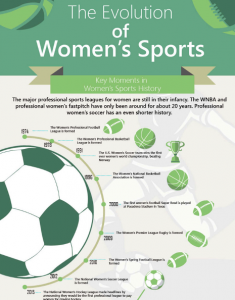
Enter the Paris 1900 Olympics when not one, not two, but twenty-two females competed. We’ll ignore the fact that 975 males competed in these Olympic Games and redirect our focus to the historical splendor of women showcasing their athletic capabilities thus proving that the female body was not just one to admire for its appearance but for its strength, agility, and finesse. Despite being limited to the sports of Tennis, Sailing, Croquet, Equestrian, and Golf the Paris 1900 games saw the first-ever Olympic Gold Medals awarded to women (although they mainly received gilded porcelain bowls than actual medals). Fast-forward seventy-four years and we see the first Women’s Professional Football League form. Four years later, in 1978, the first Women’s Professional Basketball League. Women’s sports then go from success to success from Superbowl to Premier Leagues.
This sets the tone for today’s article as I met with my friend and female rugby player Charlie Skilton to discuss our own experiences as women in the sporting and fitness worlds. The highs, the lows, the challenges we still face (yes, even today!), and what it means to be a girl in this modern era of exercise.
Charlie, like me, is a Personal Trainer. She manages a gym professionally and plays rugby for the fabulous Tonbridge Juddians in her spare time as well as competing in strongman competitions. Charlie and I grew up as athletic females before being “sporty” was considered cool. Teased for being “muscly” and for prioritising training over social events wasn’t a particular highlight for either of us but being part of a team, and a team of women at that has meant that we’ve always had immense support systems to spur us on.
Why do you love sports?
“Being part of a team is like being part of a big family. You’re part of a community and I’ve never felt anything like it. Everyone champions everyone and wants to help everyone become better. I think we’ve all felt, as females, that need to be sexy and attractive but being around a group of women who aren’t afraid to get red and sweaty, and frankly dirty is such an empowering thing. I used to think that made people think I was ‘one of the lads’ but I realise now that that’s just because we’re all raised on stereotypes. I mean, if you want to talk about female stereotypes- like women are clean and tidy- the only place I see that is that girls seem to be the only ones tidying the weights away in my gym!
Exercising in all forms makes me feel empowered. It’s therapy- it’s blowing off steam. I don’t feel any need to compare myself to men, I’m just focused on what I’m doing.”
What challenges have you faced as a female in sport?
“I’ve never been a ‘lean bean’- you only have to take a look at my dad to know that I’m never going to be!- but there is so much pressure to be toned, sexy and perfect in the world of fitness today. But what the F*** is ‘perfect’? Female body-builders are perfect for their sport; some are super lean and super cut. But for me, I know that if I stripped away my fat and got lean there isn’t a chance in hell that I could play my spot in rugby or lift logs over my head for competitions!”
Why do you think women are scared to take part in sports?
“In my experience as a trainer, they are afraid of getting ‘too muscly’. Personally in rugby, I’ve been afraid of getting hurt haha! I also think that women compare themselves to other women (when they shouldn’t). To be honest, male or female, people are often scared to start going to the gym out of fear of “not being fit enough”. I get that it can be intimidating seeing people in the gym who are super fit and seem to know exactly what they are doing but that’s the take-home: they are doing what they are doing and focused on that. At the end of the day, we were all new to the gym at some point but if you stick at it you’ll be as seasoned as the rest of us!”
Do you think there are differences between male and female sports?
“I think we need to get rid of this idea of comparing men to women. The only thing I think anyone should be focused on is their goals. We all have different goals so it seems ridiculous to compare, for example, the lifting capabilities of a male who is looking to increase strength and size to a female who is looking to become just a little bit stronger and maybe increase their lean muscle mass. We need to stop comparing and start celebrating the things we share. Ultimately anyone in a gym or on the playing field is looking to better themselves in some way or another- what a fabulous thing!- why we don’t talk about that more blows my mind.”
We’ve talked about how it was hard growing up in a world that was less accepting than the world today of athletic females. What advice would you give your younger self now about health and fitness?
“First and foremost, don’t compare yourself to others. I put pressure on myself to be lean but I realise now that I have fat but I’m not fat. I just kind of wish that it hadn’t taken me to be in my thirties to realise this! I’m strong, I’m healthy, I’m fit and I have fat. Sure, I could lose ½ a stone but I’m not bothered. I love my sport and I’ve worked damn hard to have the spot that I have and I know if I trim down I won’t be able to perform as well as I do now!”
The take-home:
Being a woman in any form of exercise or athleticism is a powerful thing. You are quite literally defying history and redefining boundaries for the success of generations to come. So, the next time you see someone, male or female, looking a little lost in the gym go say hello- spur each other on and let’s celebrate the commonality of striving to improve ourselves and choosing to invest in our health whatever shape or form (or gender!) you may be.
If you want to find out more about Charlie and how she takes care of herself off the pitch you can find her on Instagram at “Charles281189” or email her at crees_pt@hotmail.co.uk.
Great article and interview.